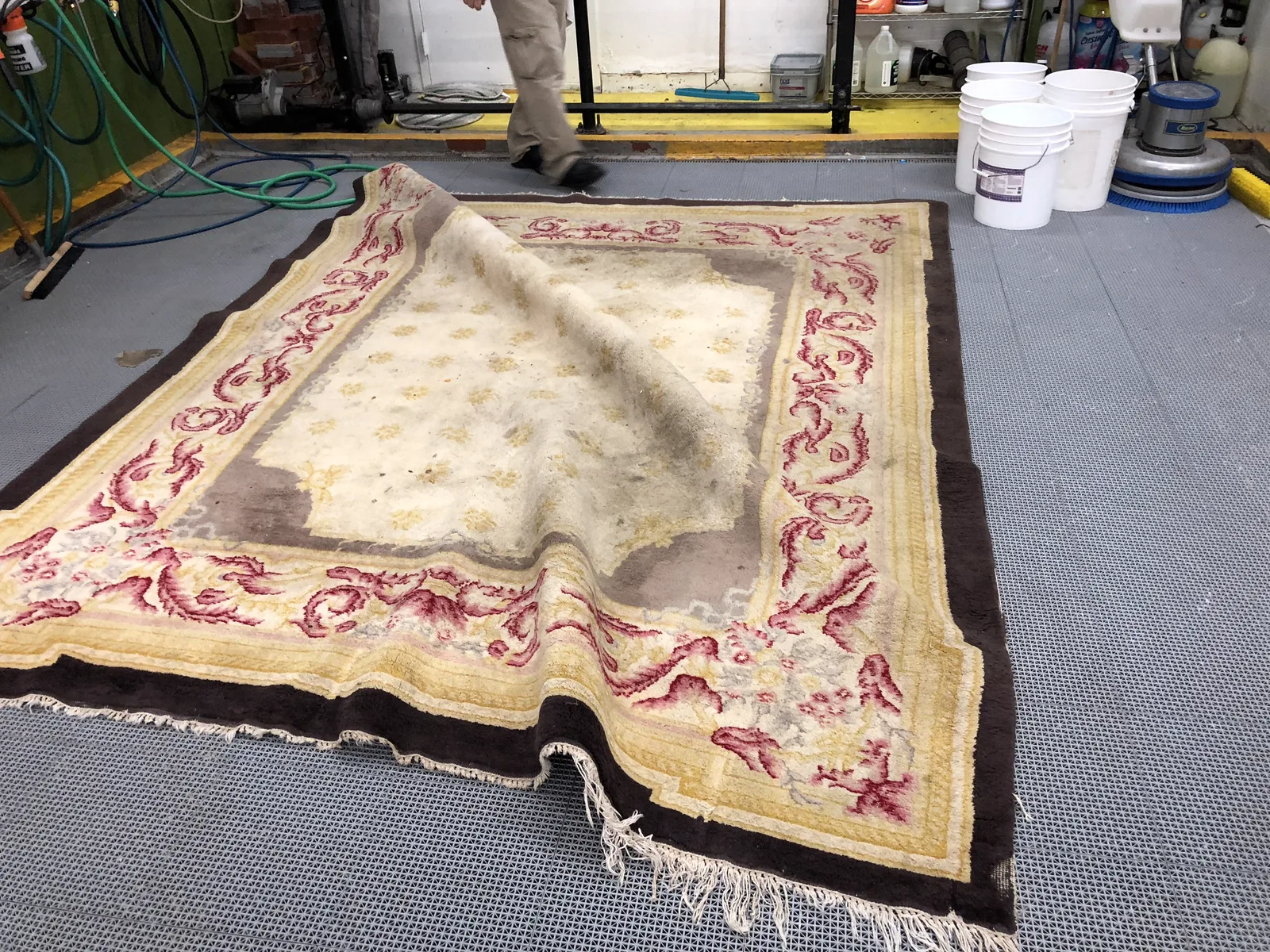
Down on the wash floor
Where your rug actually gets washed
A family shop on the Red Road side, since 2006
The rug anchoring a formal living room off Suniland, or the antique runner in a Snapper Creek estate, leaves the house, gets washed properly in our plant, and returns the way its weaver intended. We collect and bring it back across Miami-Dade — you never lift it into the car.
A rug shop, not a truck in the driveway
It comes up on nearly every Pinecrest visit. The wood and marble floors already have a service booked, and the good rug in the great room seems like it could go along for the ride.
But wall-to-wall carpet and a hand-knotted rug are built for opposite treatment. Carpet is stretched and glued to the slab, meant to be scrubbed where it lies. A fine rug is a free-standing textile — wool or silk pile knotted onto a cotton foundation, colored with dyes that were never meant to bake under a hot extraction wand.
Clean a good rug in place and three things go wrong quietly: the sandy grit stays trapped in the foundation, the dyes can creep, and the rug dries slowly against your stone floor. Under Pinecrest’s heavy summer humidity, that slow, uneven drying is precisely how browning and a musty smell take hold.
A rug that grounds an entire room deserves a proper bath, not a passing scrub.
So we take the older, slower route in our own plant: measured, tested, dusted, washed with a natural pH shampoo, and speed-dried in a controlled room. Wool, silk, antique, Navajo, shag — the process is laid out end to end.
And when a rug honestly doesn’t need the plant — a newer synthetic that’s safe to freshen at home — we’ll say so and spare you the cost.
Every weave that comes through our door
Wool, silk and cotton each answer to water differently, and so do the dyes worked into them — which is the whole reason we test before we wash. Every rug we collect around Pinecrest moves through the same in-plant sequence: measured, pH and dye tested, deep-dusted, washed, and speed-dried.
Navajo weavings and flatweaves are dye-tested before any water reaches them, then washed and dried quickly so the bold colors stay exactly where they belong.
Why we dry them fastThat long, loose pile is where deep dusting earns its keep — sand tracked in from a pool deck or a lush Pinecrest yard sinks to the roots of a shag and has to be beaten out before any water reaches it.
Inside the dusting stageCustom weaves and odd sizes are read for how they were built and washed to match that construction — and once yours is clean we can cut a protective pad to its exact shape for the marble or wood floor beneath it.
Ask us about your weaveHand-knotted Orientals are textiles, not carpet. They earn a full bath in the plant — never a hot wand dragged over them on your patio.
Follow one through the pitOlder vegetable-dyed Persians can bleed. We towel-test each one for dye stability and adjust the wash for the pieces that need it.
What the towel test showsWool is a protein fiber — the high-alkaline chemistry used on carpet leaves it harsh and dull. Our shampoo stays in the pH range wool can take.
What we bathe wool inSilk pile is soft and crushes easily, so it meets gentler brushes and a lighter hand in the wash — then the same controlled speed-dry that keeps the sheen and crisp color a silk brings to a formal Pinecrest room.
The lighter hand, explainedWashing an antique is closer to conservation than cleaning. If a full wash would do more harm than good, you hear it before you spend a dollar.
See the bench work tooFrom your doorstep to the pit and back
Out come the tape and the notepad: we log the size, the worn patches, the spots and any repairs, then run pH and dye-stability tests. The exact price reaches you before anything else happens.
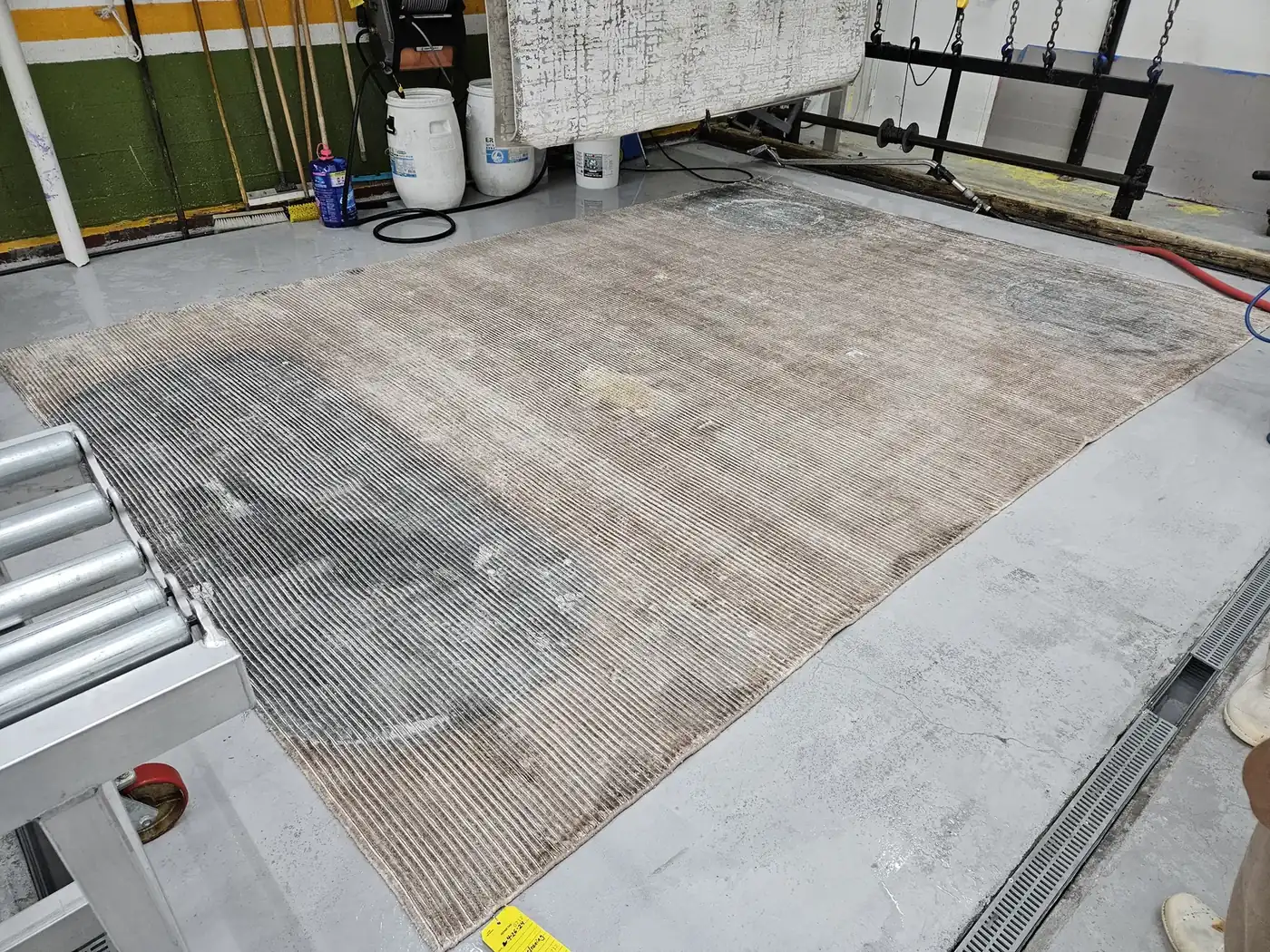
Pounds of dry grit hide below the pile — and Pinecrest’s lush yards and pool decks track in plenty. We beat and vacuum it out before the wash.
Fiber and dye set the recipe: a full wet wash with a natural pH shampoo, easy on delicate wool and silk, thorough where soil has ground itself into the pile.
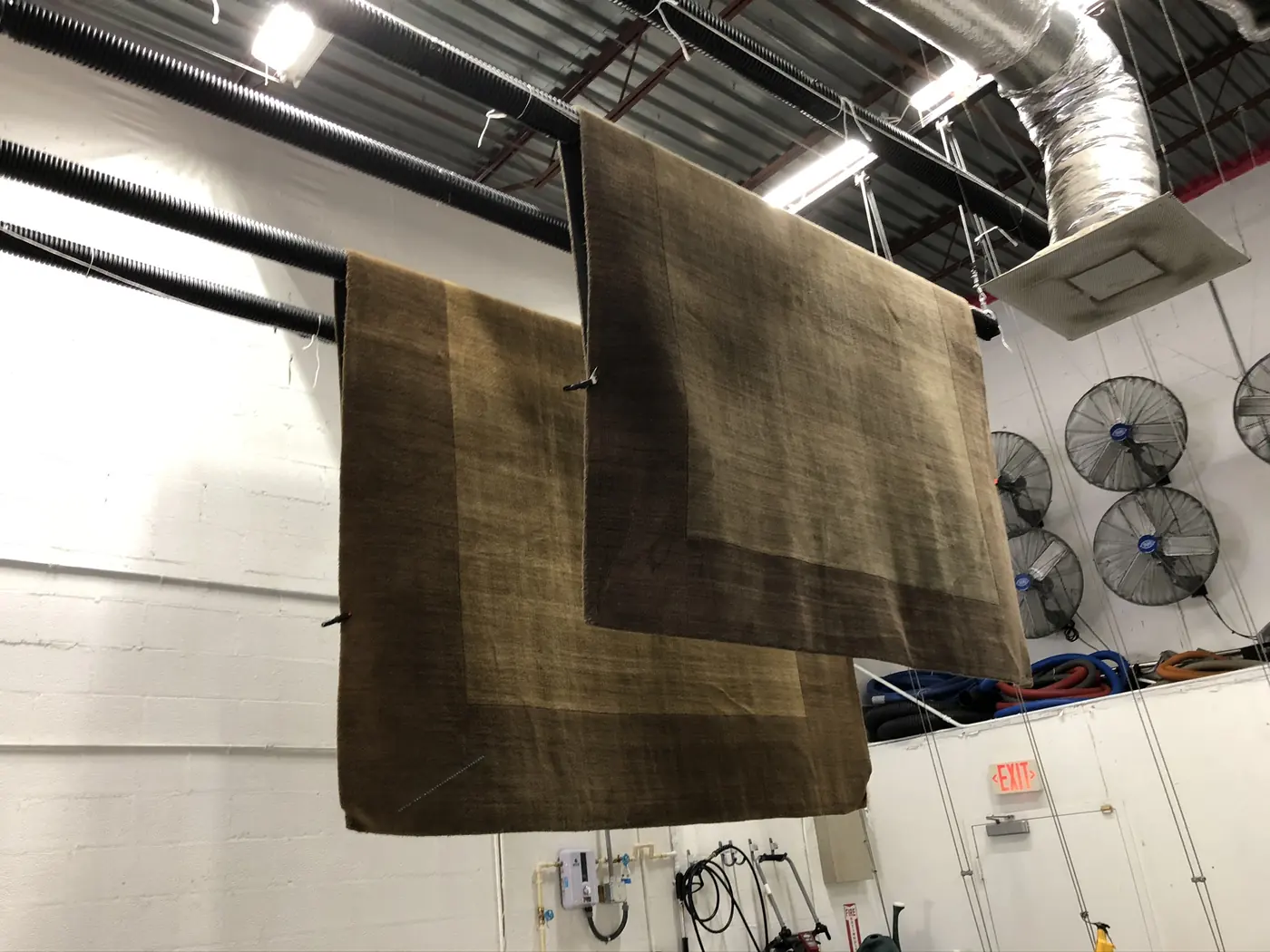
Into the drying room, where temperature and humidity are held steady — because a rug left to dry slowly in Pinecrest’s damp air is exactly how one color drifts into the next. Fast, even drying stops it.
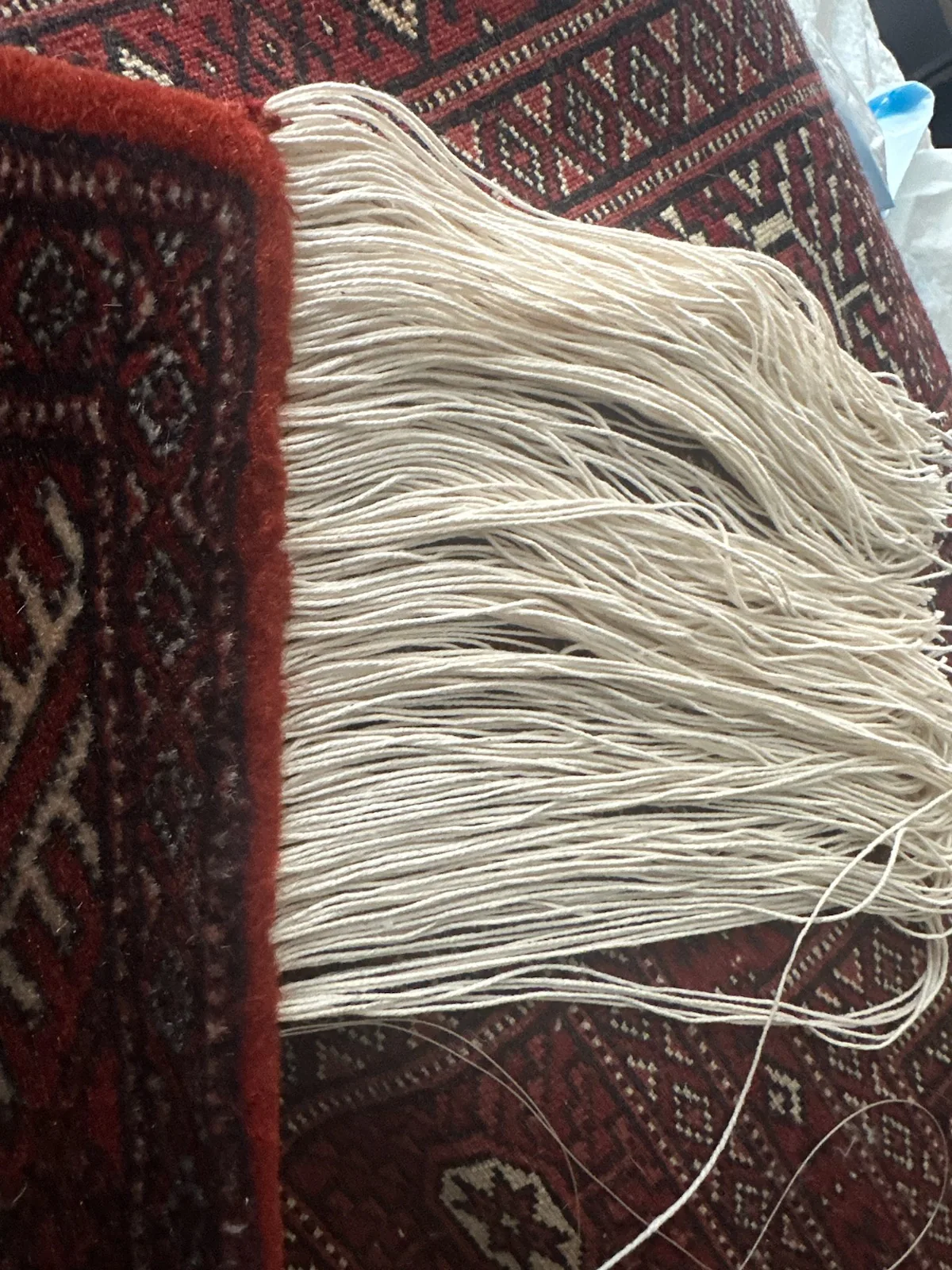
A brush lays the pile back into its natural direction, a comb straightens the fringe, and one last inspection follows — then it rides home to Pinecrest. Pickup and delivery stay free across Miami-Dade County.
What we hold ourselves to
Measuring, inspecting and the pH and dye tests all come first. The exact price is in your hands before any work begins.
We collect and bring it back across all of Miami-Dade County. Once your rug is finished we call and settle on a delivery time that suits your day.
From the first dusting to the final dry, your rug stays inside our own Pinecrest plant — never subcontracted, never trucked out of the area.
A week or so is the usual turnaround. When repairs add time, you hear it at the inspection — not as a surprise on delivery day.
If a wash or a repair isn’t worth what it would cost you, we say so while the rug is in front of us and leave it alone.
Down on the wash floor
Who answers when you call
Washing Pinecrest rugs since 2006 — every one of them in our own plant, and every repair finished by our own hands at the bench.
Dial the number and you reach the people whose hands will be on your rug — before, during and after the job. Nothing is farmed out, and nothing is trucked off to a wholesaler across the county you’ll never meet.
Most of our work comes from Pinecrest families we’ve looked after for years, and the neighbors they pass our name along to.
Where the figure comes from
Because fiber and condition, not square footage, decide the work — two rugs of the very same size can need completely different handling.
A machine-made 9×12 in good shape is a straightforward wash. The same size hand-knotted rug with unstable dyes, years of buried grit and a pet accident in one corner is another job entirely.
The number rests on what the rug truly is: measured size, fiber and construction, how stable the dyes are, how deep the soil runs, any pet contamination, and whether the fringe or side cords need work.
So the inspection comes first and the quote second — given once, before anything is touched.
The pre-inspection costs nothing, and the figure we hand you at pickup is the figure you pay. No coupons, no phone-quote guessing, no unwelcome surprise waiting at delivery.
The bench, not a workroom out of town
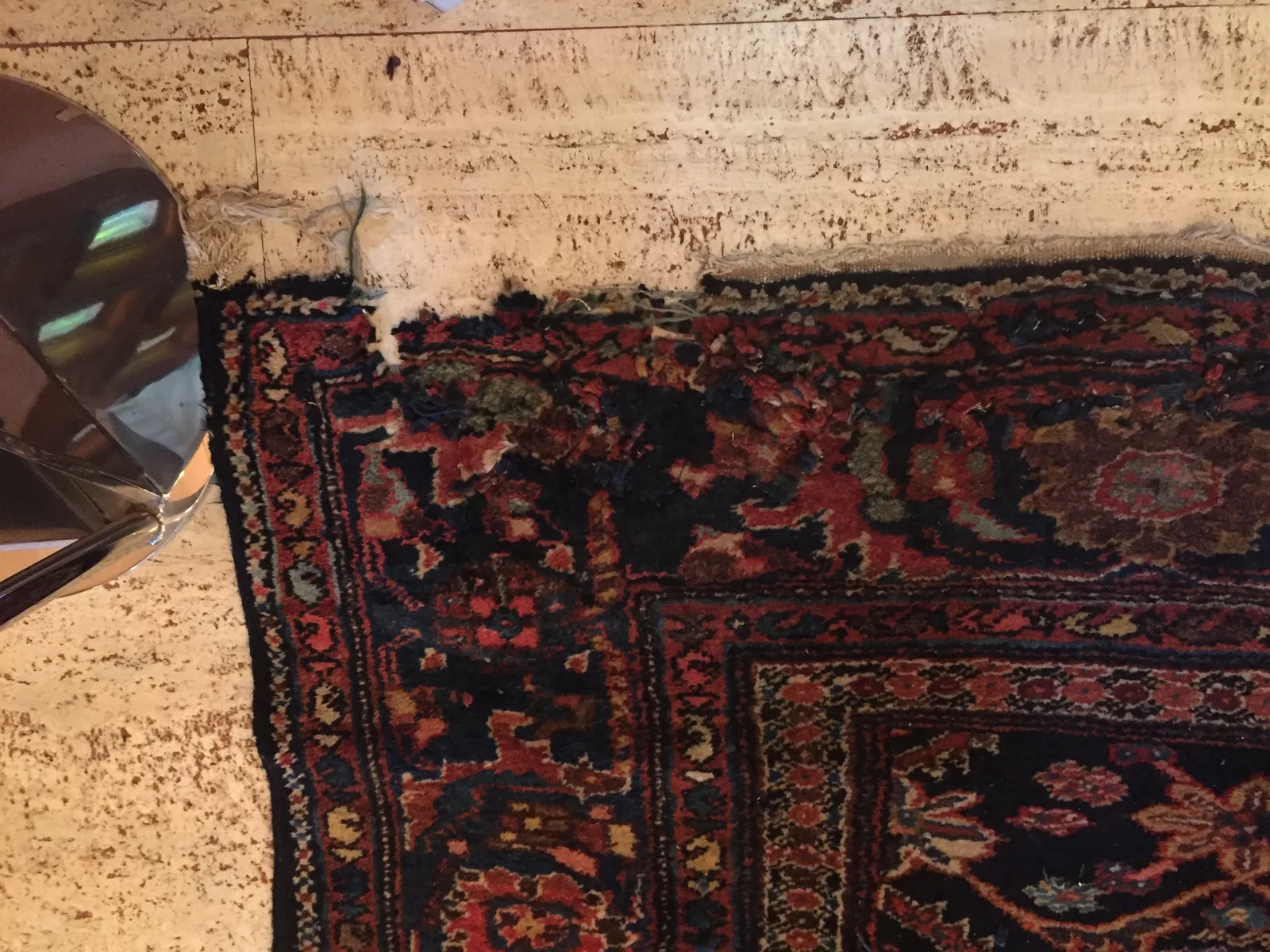
Anything worn that surfaces at inspection earns a plain recommendation: mend it, leave it, or — when the fix would run past what the rug is worth — skip it. Every repair is done by our own hands here in Pinecrest, never shipped out. Look in on the bench →
What comes back to your floor
Questions Pinecrest owners bring us
There is nothing to bring anywhere. We run free pickup and delivery across all of Pinecrest — Suniland, Snapper Creek, the Pinecrest Gardens area, the Red Road side and North Pinecrest — plus neighboring Palmetto Bay, Coral Gables and South Miami. We come to the house, roll and wrap the rug, and return it once every step of the work is finished.
A hand-knotted rug is a loose textile, not carpet fastened to the slab. Cleaning it in place with a hot wand locks grit into the foundation, can set the dyes moving, and leaves it drying slowly on your marble or terrazzo — which in Pinecrest humidity is how browning and a musty edge begin. It needs a wash pit, laid flat and flushed.
We test before we wash. Every rug gets a pre-inspection with a pH reading and a dye-stability check, because some older vegetable-dyed pieces will bleed the moment they meet water the wrong way. If yours is a risk, we adjust the method — and we show you exactly what we found before anything is soaked.
We price after we inspect, never before. Measured size, fiber, construction, dye stability, how much soil is buried in the pile, pet contamination and any repairs each change what a rug needs, so a number over the phone would only be a guess. When we collect the rug we examine it and give you the exact price before any cleaning starts.
Usually, yes. Urine dries into alkaline salts deep in the foundation, and blotting the surface never reaches them — so we submerge and flush the whole rug to dissolve them out. Old or repeated accidents can be stubborn, and we give you an honest read at inspection about what result is realistic before you commit to anything. Read more on urine odor.
Yes, and every bit of it is done by hand at our own shop, never sent out. That covers fringe repair and replacement, side and edge overcasting, hole repair and reweaving, moth damage, dry rot, resizing and full restoration. If a repair would cost more than the rug is worth, we will tell you plainly instead of selling it.
Most rugs are back in about a week. The wash is followed by controlled speed-drying in a temperature and humidity managed room, which is what keeps the colors from migrating — so it is not something we rush. Rugs that also need hand repairs take a little longer, and you get an honest timeline at the inspection.
Free look-over, no pressure of any kind
Give us a few details on the rug and we’ll arrange a free Pinecrest pickup — then tell you honestly what it actually needs.
We come collect the rug, lay it out for a proper inspection, and hand you the price before any work starts — then wash and mend it under one Pinecrest roof.
Rather speak to someone first? Call or text (786) 946-9133. Your firm price is set at the free pre-inspection, never guessed ahead of time.
Filmed at the plant
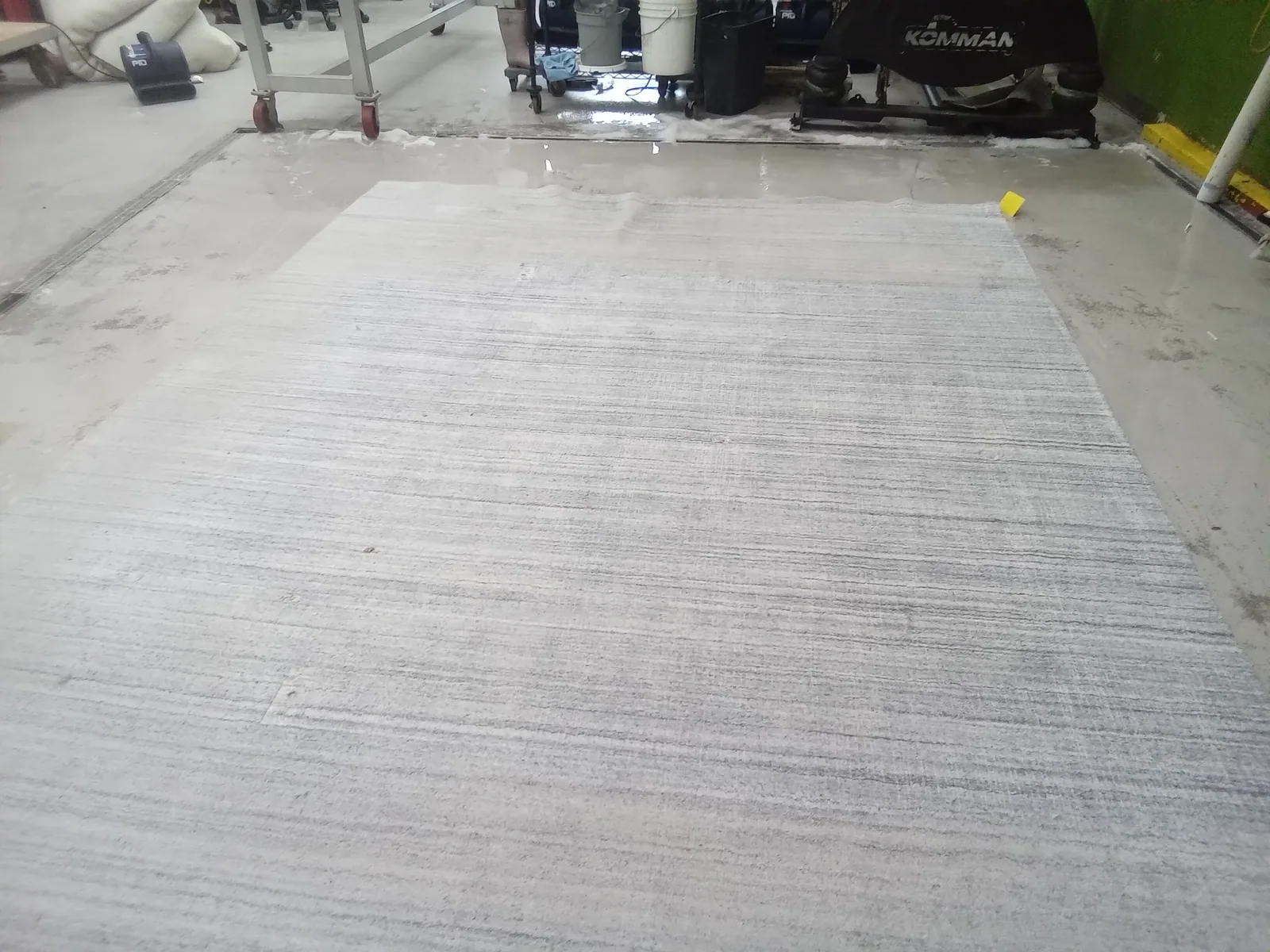
Dry soil comes out first, and only then does water go on. What you are watching is the wash itself: shampoo through the pile, then a rinse that carries the loosened soil off the rug.
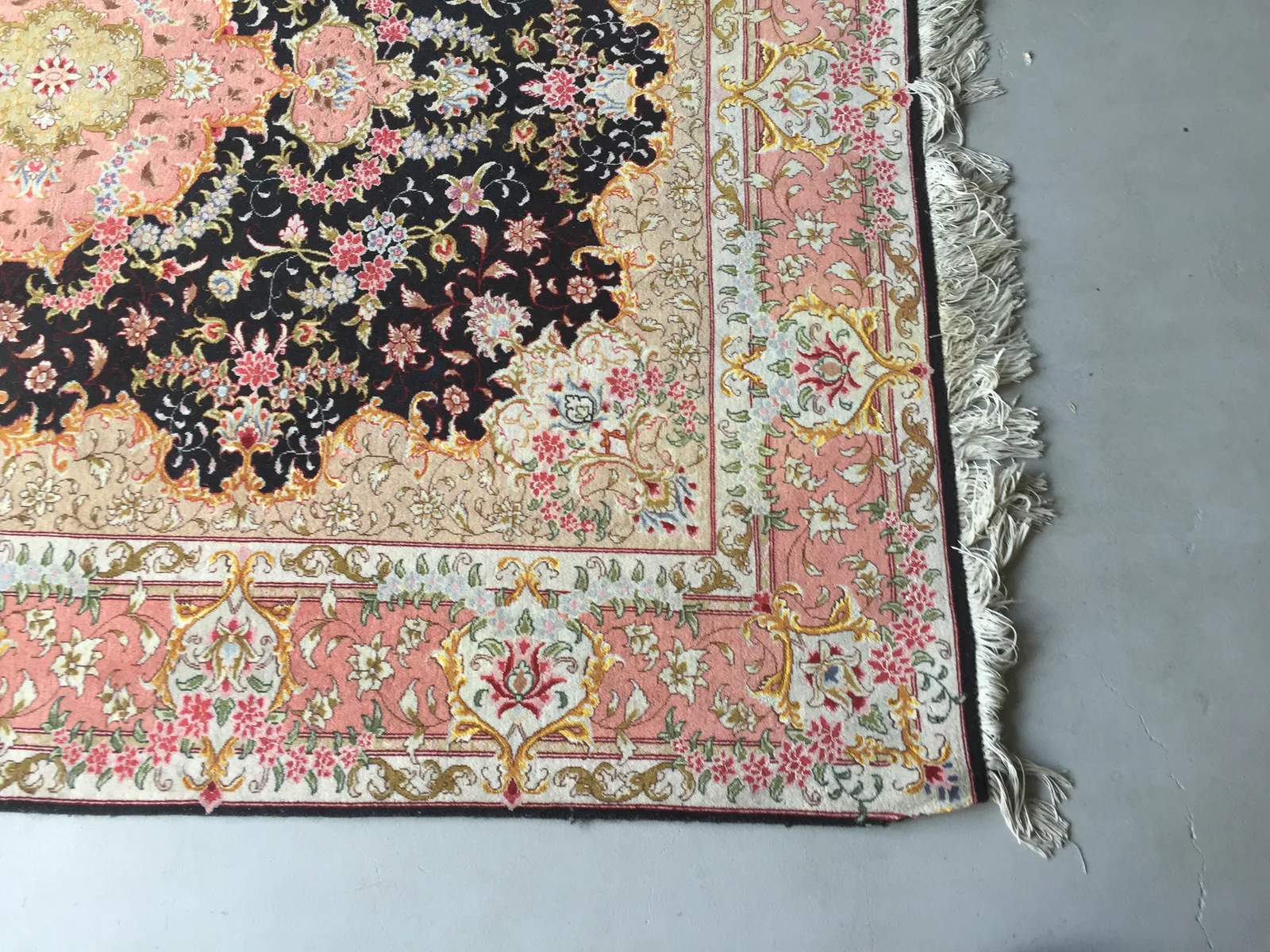
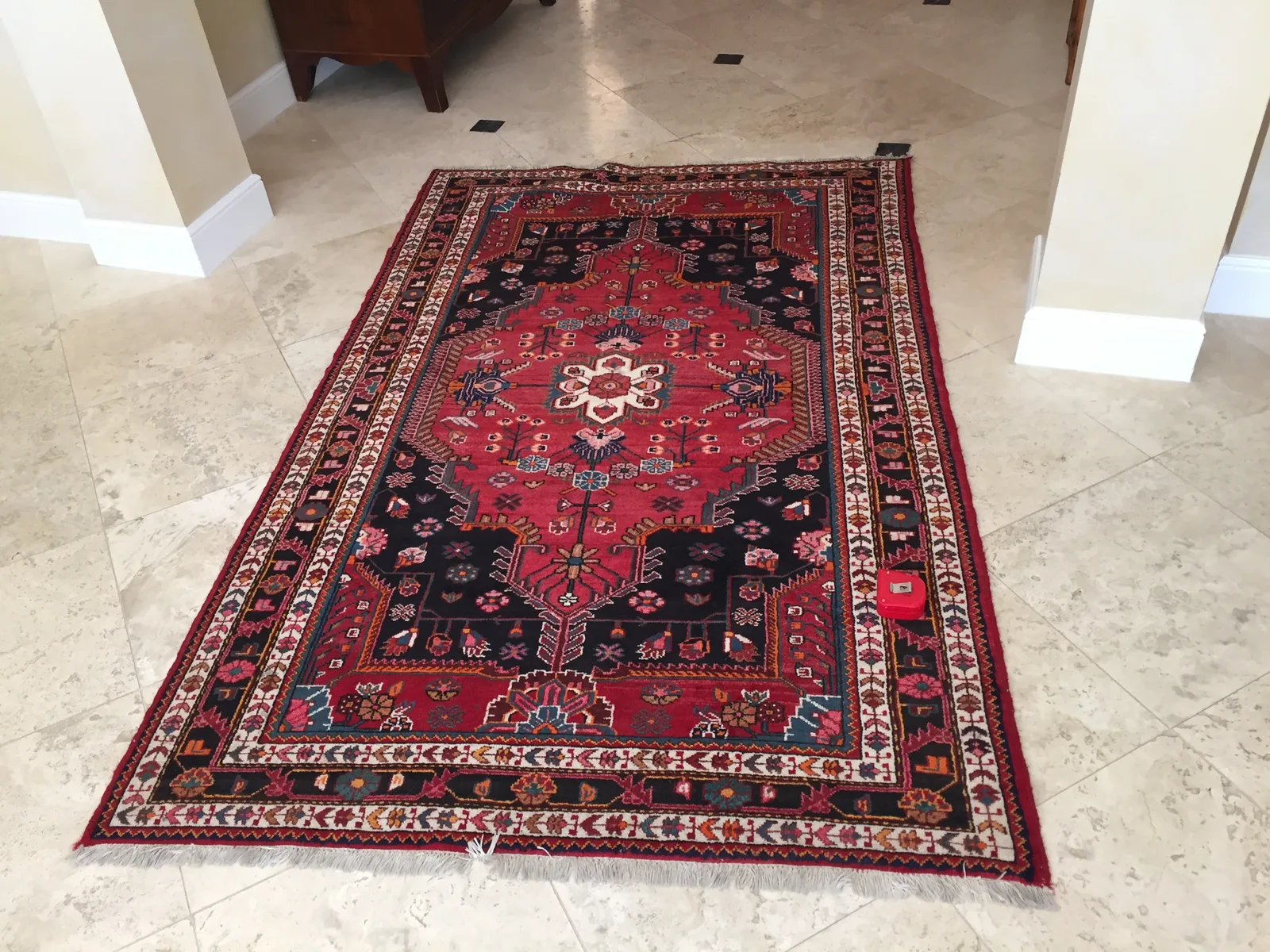
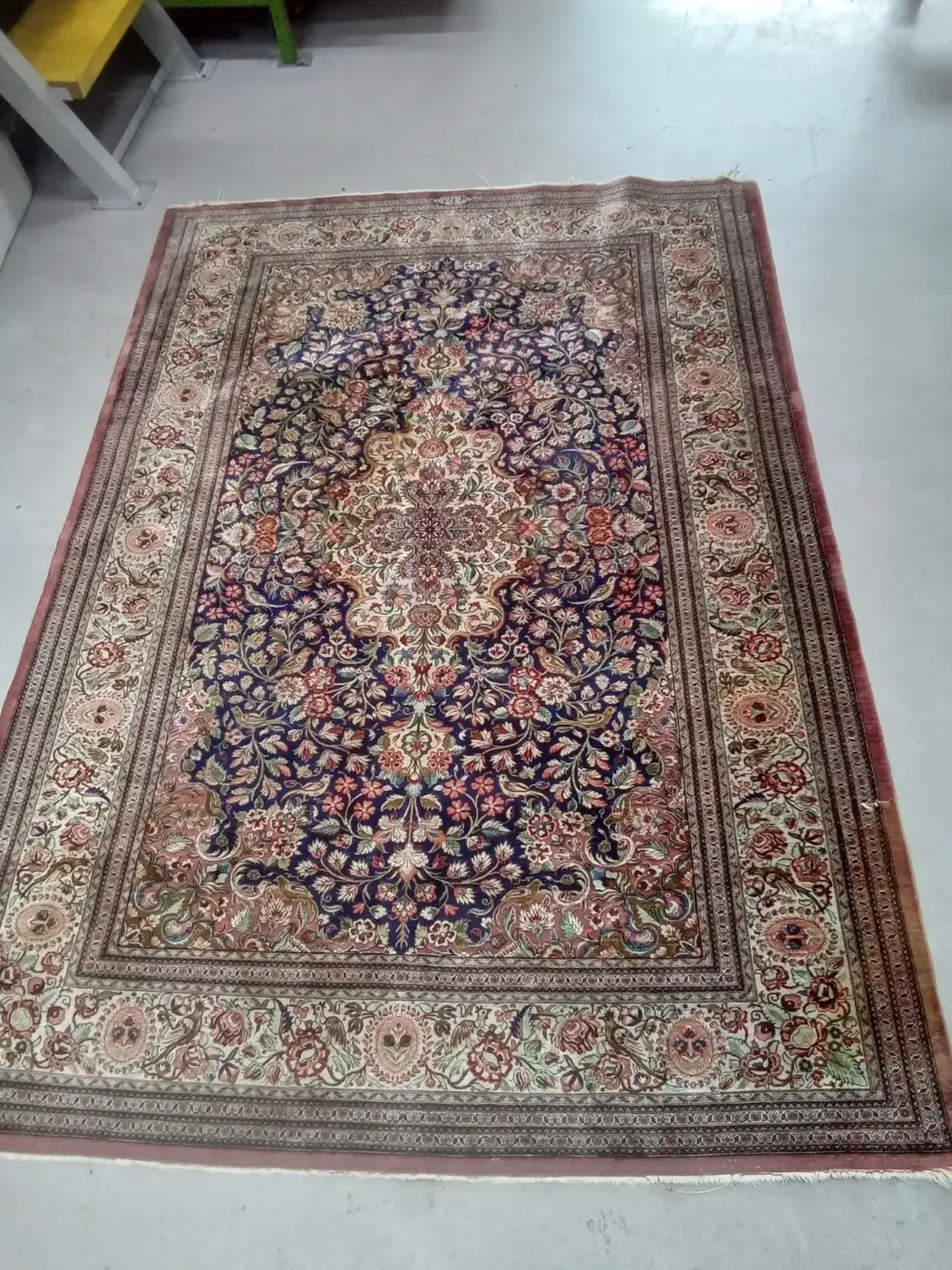
A few pieces from our bench — hand-knotted, wool, and silk, cleaned in our own facility.